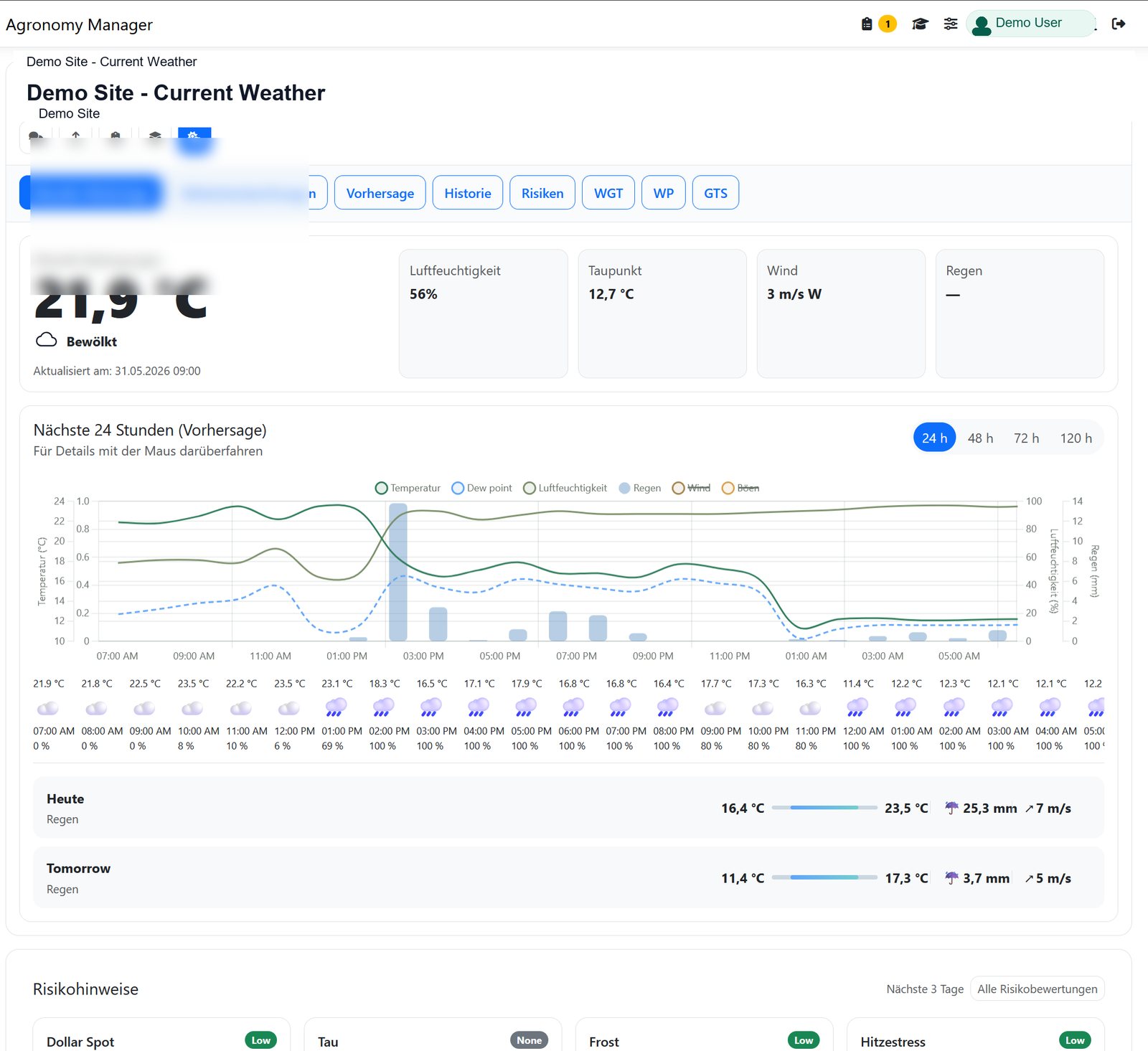
Weather, forecast, and risk signals tied to the same working surface.
Single-site teams need fast local context before they commit people, equipment, and materials.
For a team responsible for one venue or surface network, the priority is clear local control: know the field history, see the weather context, track risks, and keep every action attached to the right surface.
Single-site teams need fast local context before they commit people, equipment, and materials.
The field-level workflow is about reducing reconstruction later: what happened, where it happened, what the weather was doing, and what evidence supports the next decision.
Organize pitches, greens, zones, and surfaces so records stay attached to the places teams actually manage.
Review local weather, growth windows, and risk indicators before daily work becomes a guess.
Keep soil tests, water tests, notes, images, and follow-up records available beside the field history.
A useful field management system gives the team a working record, not just a static database.
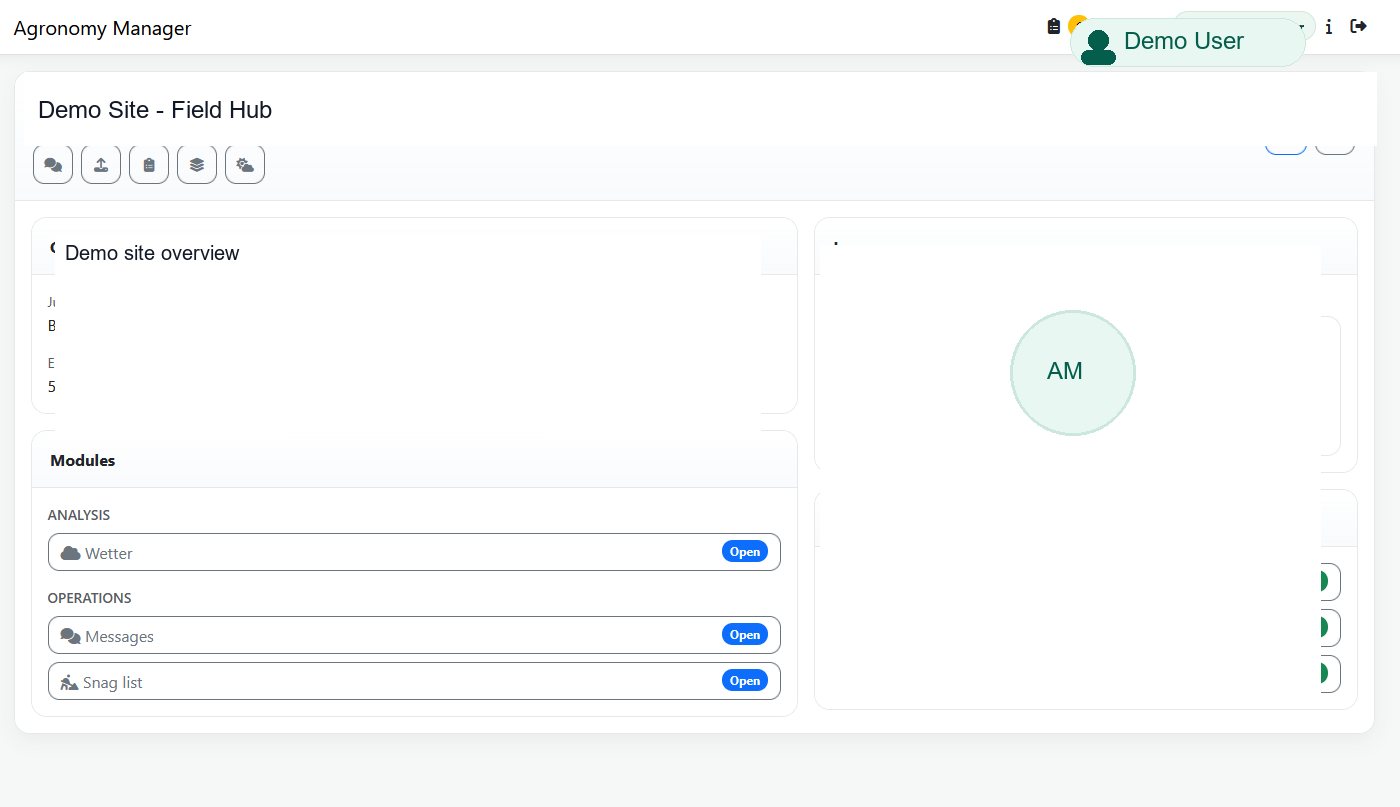
Review field status and recent conditions before assigning work.
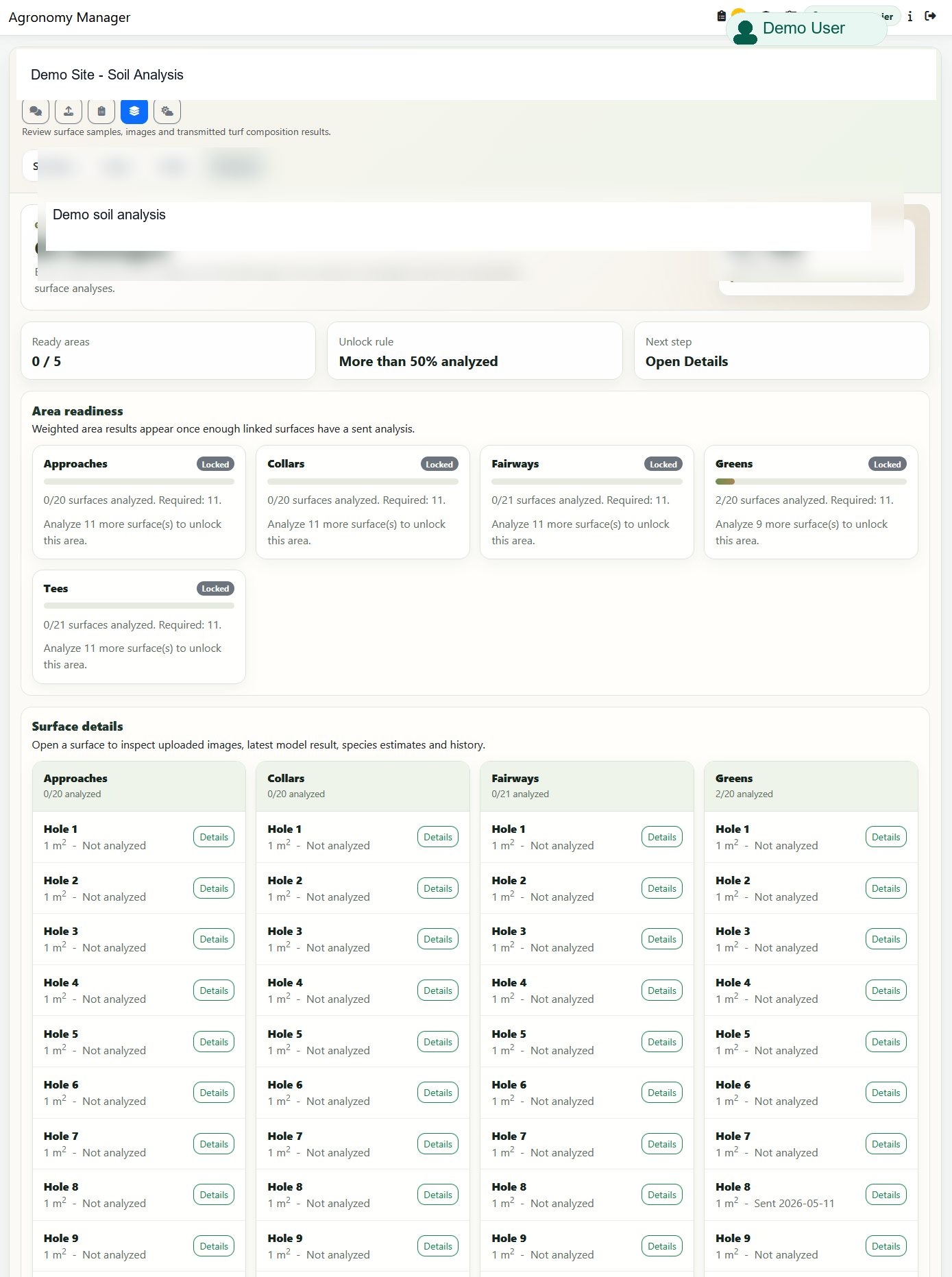
Capture notes, photos, tests, and actions against the right surface.
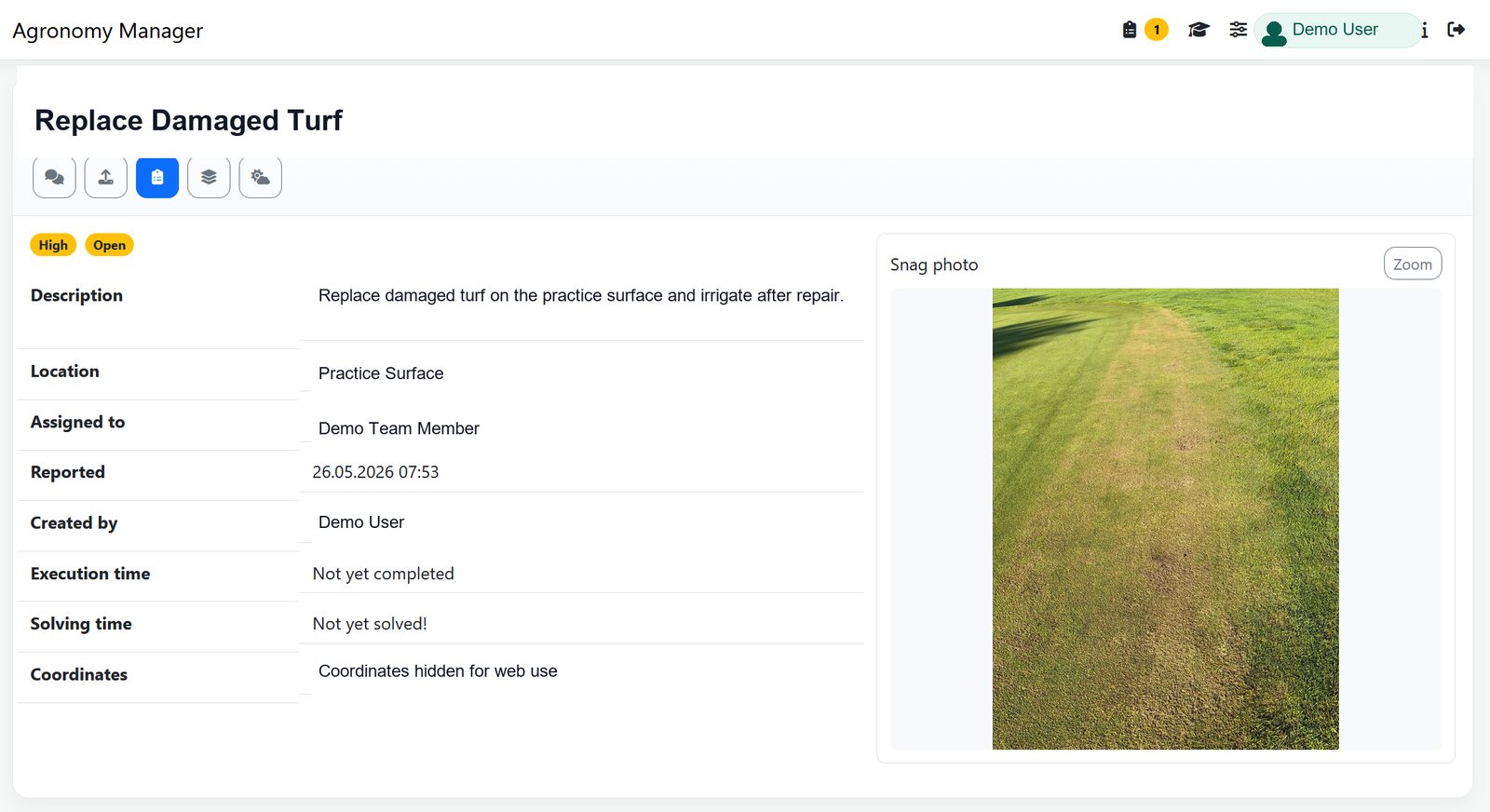
Use the field history for handovers, reviews, and recurring decisions.
Daily observations become easier to compare when the work and evidence live with the surface.
Managers can review what changed, what was done, and what needs follow-up without rebuilding the story from scattered sources.
If your buying question is about one field, course, or grounds team, start here. If it is about multiple sites, departments, users, and portfolio visibility, use the multi-site page.